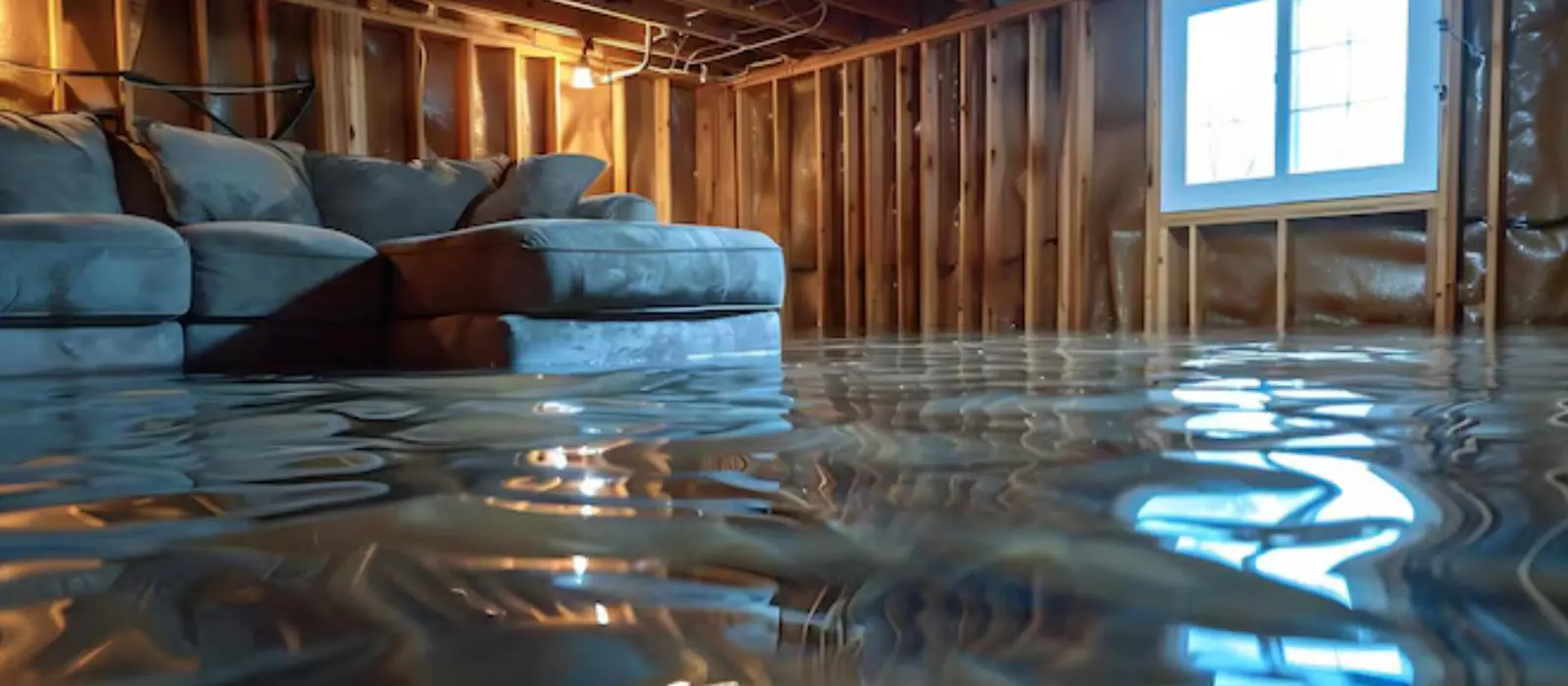
Water damage in a basement rarely announces itself with a flood. More often it starts as a damp corner, a musty smell or a patch of paint that bubbles on a wall. By the time the carpet squishes underfoot, the water has usually been working for a while. This guide covers what to look for, where basement water comes from and what to do first if you live in Magna, UT.
If water is standing in the room right now, skip ahead to the first-hour steps and then call the 24/7 dispatch line.
What Basement Water Damage Looks Like
Dark patches on carpet
Wet pad wicks water outward, so the stain is usually larger than it looks on the surface.
White chalky deposits
Mineral salts left on concrete or block where water has seeped through.
Peeling paint or loose tile
Moisture behind the finish pushes it off the wall or floor.
A damp, earthy smell
Wet materials hold odor, even when nothing is visibly standing.
Where The Water Comes From
Basements take on water four common ways. Window wells fill during storms and push water past the frame. Groundwater rises during spring runoff and seeps through the floor and wall joints. A sump pump fails or loses power during a storm. And a sewer line backs up through the floor drain.
Each source calls for a different response. Clean rain and groundwater are handled as flood loss, while a sewer backup is contaminated and needs containment. The table shows the common cases.
| Source | Clue | First step |
|---|---|---|
| Window well | Water at the base of a window wall | Clear the well and extract the water |
| Groundwater | Seepage at the floor and wall seam after snowmelt | Extract, then dry the slab |
| Sump failure | Pit full, pump silent or running constantly | Restore power, then pump the room |
| Sewer backup | Dark water or smell from a floor drain | Keep out and call for containment |
These are common patterns. A crew confirms the source and the water category on site.
The First Hour
- Stay out of the water if it could touch outlets, cords or the panel.
- Shut off the main water valve if a pipe is involved.
- Photograph the room before moving anything.
- Lift boxes and furniture legs onto blocks or shelves.
- Call the dispatch line and describe the depth and source.
The dispatcher gives safety steps while a crew is arranged.
What Restoration Involves
The crew starts with emergency water removal, using submersible pumps for deep water and extraction units for carpet. Wet pad and the bottom of wet drywall come out, since they will not dry in place. The concrete slab and framing are then dried with air movers and dehumidifiers until moisture readings reach dry standards.
Drying a basement takes longer than drying an upstairs room because concrete holds water for days. Equipment typically runs for several days, and rebuilding waits until the readings are dry.
Mold And Waterproofing
If drying is delayed, mold can start on wet drywall within a couple of days, and the work then moves to mold remediation. If the basement floods repeatedly, restoration alone is not the answer. A drainage or waterproofing contractor can look at grading, gutters, the sump system and the foundation once the drying is complete.
After the water is out, ask for dated moisture readings on the slab and the lower wall. Numbers that stop falling usually mean a hidden source, such as a cracked window well or a footing drain that is not carrying water away, and that needs fixing before any rebuild begins.
Local Resources For Magna Basements
Overland flooding from rivers, creeks, streams and canals is Salt Lake County Flood Control's job, and flooded streets and parking lots fall to your local government. The county's Public Works shed in Midvale hands out sandbags, with a reminder that they divert water instead of sealing it out.
Check your flood zone by address at msc.fema.gov or floodhazards.utah.gov instead of assuming. If the trouble is a backup from the main, the sewer line in the street may belong to Magna Water District, which serves much of Magna.
Insurance For Basement Water
A burst supply line or failed water heater is often a sudden loss that a homeowners policy answers. Groundwater and storm runoff coming in from outside are generally flood losses, and the Utah Insurance Department says basic homeowners policies leave flooding out. Your policy or your insurer settles it.
Basement Water Damage FAQs
No. Condensation on cold walls and slabs can leave a basement damp, especially in winter. A moisture meter can tell the difference between surface condensation and seepage.
Most take three to five days of equipment time, longer if the concrete or framing is saturated. The crew keeps equipment running until readings reach dry standards.
For a thin film of clean water, yes. Anything deeper, anything near electrical equipment or anything that came from a drain should be left to a crew.
Use the FEMA map service at msc.fema.gov or the Utah Risk Map at floodhazards.utah.gov, and ask your local building department if a map is unclear.
Crews also work in West Valley City and West Jordan when basement water strikes there.