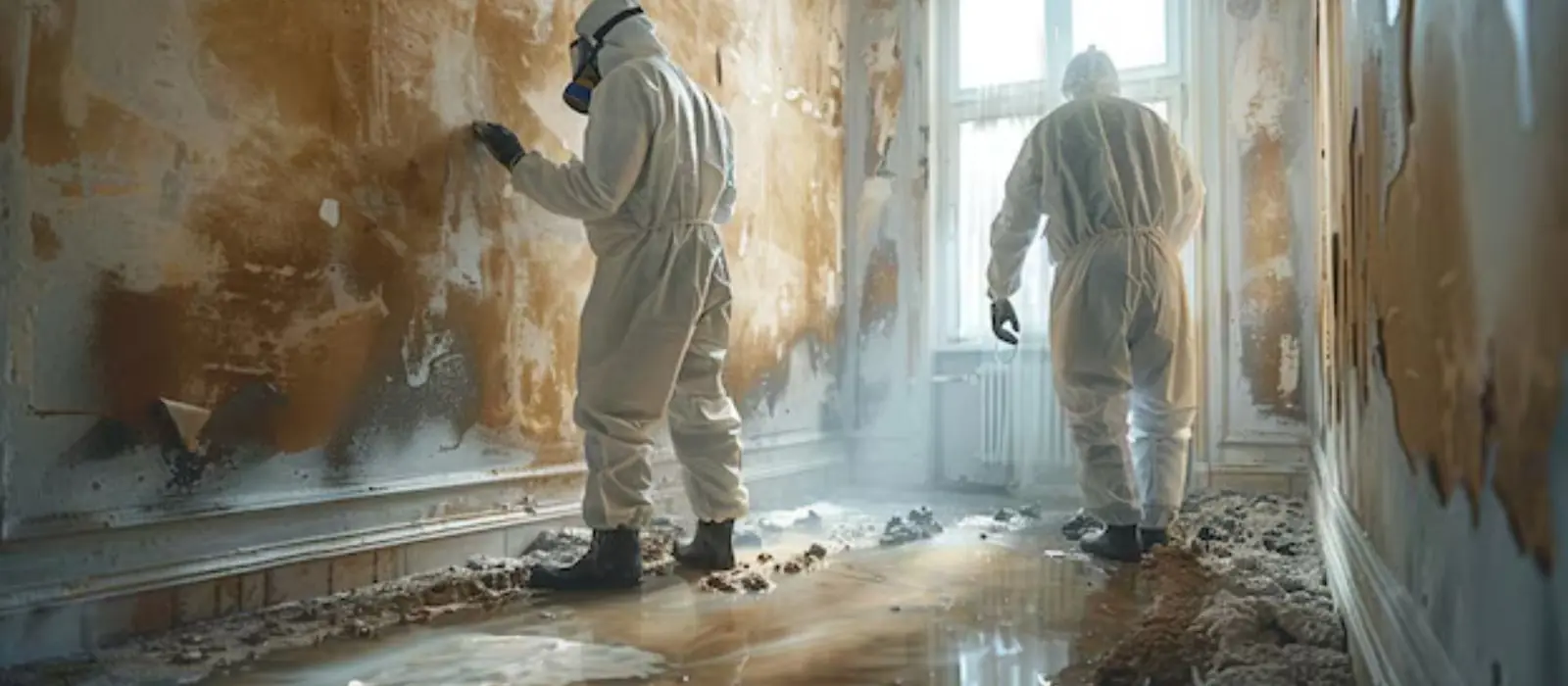
Mold Remediation After A Moisture Problem
Mold remediation in Magna, UT is the process of containing, removing and cleaning mold, and of dealing with the moisture that allowed it to grow. Mold needs water, so the work starts with finding where the water came from. A crew that skips that step is only cleaning a problem that will come back.
Many mold calls begin with a leak that was fixed months earlier. A toilet overflow upstairs, a leak under a bathroom sink, a roof drip or a condensate line that backed up can all leave a wall or ceiling damp long after the visible water is gone. If water damage is still active, water mitigation comes first.
Is That Stain On My Ceiling Mold?
People describe it as dark spots in a closet corner, a musty smell in the basement or fuzzy patches where furniture was pushed against an exterior wall. In trade terms, the next step is an inspection to see whether it is mold, how far it goes and what moisture feeds it.
Do not scrub it with a dry brush or run a fan over it. That spreads spores. Close the door to the room, stop any known leak and call for an assessment.
Bathroom ceilings and corners
Steam and poor ventilation leave wall-to-ceiling corners damp.
Closets on exterior walls
Cold walls collect condensation behind stored items.
Basement corners and stairs
Wet slabs and cool walls hold moisture for weeks.
Under sinks and around tubs
Slow supply leaks soak cabinet bases and drywall.
Call and describe what you see before touching it.
Mold Testing And Inspection
Inspection is the first step. A crew looks for the source of moisture, takes readings with a moisture meter and maps how far the wet area runs. Visible growth plus a known leak may need no lab test at all.
Testing can help in three cases. You suspect hidden growth behind a wall, a buyer or lender needs documentation, or you want a clearance test after removal. Independent clearance testing should come from a separate company that did not do the work, so the result is not grading its own job.
Ask any company what standard its crews follow. ANSI/IICRC S520 is the published standard for mold remediation, and it is fair to ask whether the crew works to it.
How Removal Is Done
Fix the moisture
The source is found and stopped, and the area is dried.
Contain
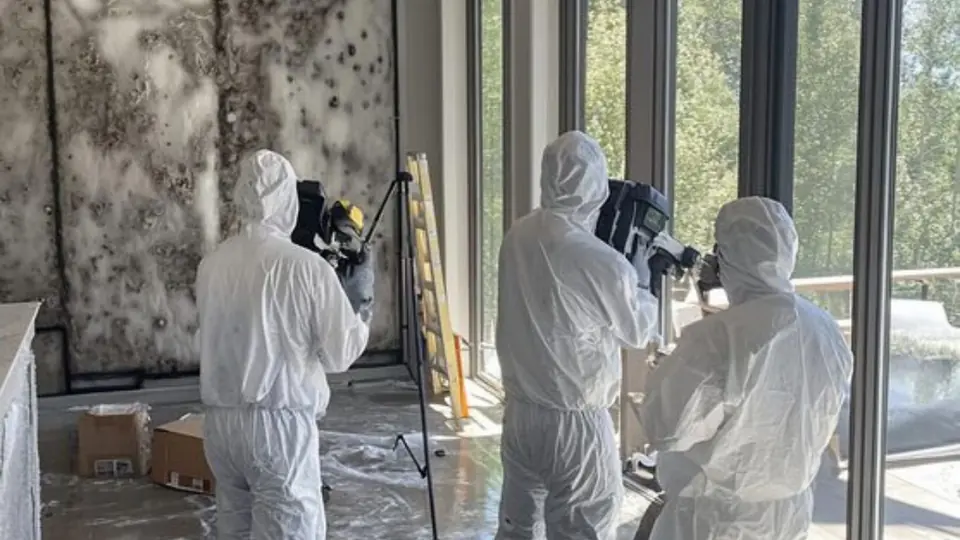
Plastic barriers seal the work area, and negative air machines with HEPA filters keep spores from spreading.
Remove and clean
Porous materials with growth, such as drywall and insulation, are cut out. Hard surfaces are cleaned with HEPA vacuums and damp wiping.
Dry and verify
The area is dried again, and a clearance test can confirm the result.
Mold Removal And Black Mold Cleanup
Removal depends on the material. Drywall and insulation with growth usually come out. Wood framing is cleaned and dried and may be sanded or treated by the crew. Concrete and tile are scrubbed. The crew bags waste inside the containment area before it is carried through the house.
Black mold is a color, not a diagnosis, and the same containment and removal steps apply to any visible growth. We do not make health claims. If someone in the household has concerns about indoor air, speak to a physician.
| Material | Usual approach |
|---|---|
| Drywall and insulation | Cut out and replace |
| Wood framing | Clean, dry and verify |
| Concrete and tile | Scrub and dry |
| Carpet and pad | Usually removed |
The approach for each area is confirmed on site.
Mold After Water Damage
Mold can start within a couple of days in wet drywall or carpet pad, so fast drying lowers the risk. If a leak was only dried on the surface, growth can start inside the wall. After a flood or burst pipe, the best protection is complete structural drying before anything is rebuilt.
If growth is already present after a water loss, remediation happens before repair. Rebuilding over mold hides the problem and seals moisture in. Water damage repair comes after the area has been cleared.
Mold In Magna Homes
Houses built south and east of Main Street in the 1970s sometimes have bathrooms with no exhaust fan, or with a fan that empties into the attic, and the moisture settles on ceilings. Correcting the venting belongs in the same project as the cleanup.
Basements in the area can also collect moisture during spring runoff. Keep gutters clear, downspouts extended and soil sloped away from the foundation, and watch for musty smells after storms.
Insurance Notes
Mold coverage turns on the policy and on what caused the moisture. A covered water loss sometimes carries mold along with it, while long-term leaks and neglect are frequently excluded. Ask your insurer, and keep photos and records of the work.
Cost Factors For Mold Remediation
- Affected square footage and how far growth extends.
- Materials involved, since drywall comes out and concrete is scrubbed.
- Containment and air filtration needed.
- Drying days and equipment to correct the moisture.
- Rebuild scope after clearance.
Call (385) 988-9410 to talk through the affected area. Scope and price are laid out before containment goes up.
Mold Remediation FAQs
Color alone does not identify a mold, and a lab test is the only way to name a species. We do not diagnose health effects. If someone in the home has health concerns tied to indoor air, ask a physician. For the building itself, any visible growth means a moisture source that needs fixing.
Often not. Growth that follows a known leak can be removed without a lab test first. A test earns its cost when growth may be hidden, when a lender or buyer wants paperwork or when you want clearance afterward, and that clearance should come from a third party instead of the removal crew.
Ask the lender exactly what it needs, which is often written proof that the work was done and that a clearance test passed. We can do the remediation and the documentation, but we cannot promise what a lender will accept.
No. Mold grows where there is moisture, and if the source keeps running it will return. Fix the leak, dry the area and then remove the growth.
Ask whether your state licenses mold work, and ask any company about its crew qualifications and whether it works to ANSI/IICRC S520.
No, but most household mold follows moisture from a leak, condensation or a wet building material. Bathrooms, closets against exterior walls and basement corners are common spots.
Containment crews also travel to Salt Lake City and other nearby towns.