
Flood Damage Restoration When Water Comes From Outside
Flood water enters a home from outside, through windows, doors, foundation walls or floor drains. If it is happening now in Magna, call the 24/7 dispatch line, stay out of the water and keep power off to wet areas only if the panel is reachable without stepping in it. Report any electrical or gas risk to the utility or 911 first.
Flood water is treated as contaminated until proven otherwise. Do not wade through it, do not let children or pets play in it, and wear boots and gloves if you must enter. A crew can often be sent the same day, and the process is the same after hours.
Flood Versus Other Water Damage
A burst pipe puts clean water into a home. A flood brings in whatever the ground, street or sewer was carrying, and that is why the cleaning rules are stricter. Under ANSI/IICRC S500, floodwater and sewage are Category 3, which means porous materials are removed and hard surfaces are cleaned and sanitized.
The difference also changes insurance. A sudden pipe break is often a homeowners claim, while floodwater falls under separate flood coverage, which the Utah Insurance Department says usually carries a waiting period of about 30 days.
| Source | Water category | Typical handling |
|---|---|---|
| Supply line break | Category 1 | Extract, dry, repair |
| Washing machine overflow | Category 2 | Extract, clean, dry, replace pad |
| Sewer backup or floodwater | Category 3 | Contain, remove materials, sanitize, dry |
The category can worsen with time, so a crew checks it again if water sat for days.
Flood Risk Around Magna
Magna sits on the valley floor below the Oquirrh Mountains, south of the Great Salt Lake. Spring snowmelt and heavy storms raise creek and canal flows across Salt Lake County. Overland flooding along rivers, creeks and canals is Salt Lake County Flood Control's territory, and road flooding is handled by your local government.
Do not guess your flood zone, since three map tools show it by address: msc.fema.gov, floodhazards.utah.gov and the county floodplain map. Sandbags can be picked up at the county shed in Midvale, though they only redirect water.
Window well overflow
Water pools against a basement window and pushes in around the frame.
Groundwater seepage
Water rises through the slab or the seam where the wall meets the floor.
Surface runoff
Storm water reaches doors, garage openings or low spots.
Sewer backup
Drains overflow because the line downstream is full.
Describe where it is coming from and how deep it is.
Basement Flooding Cleanup
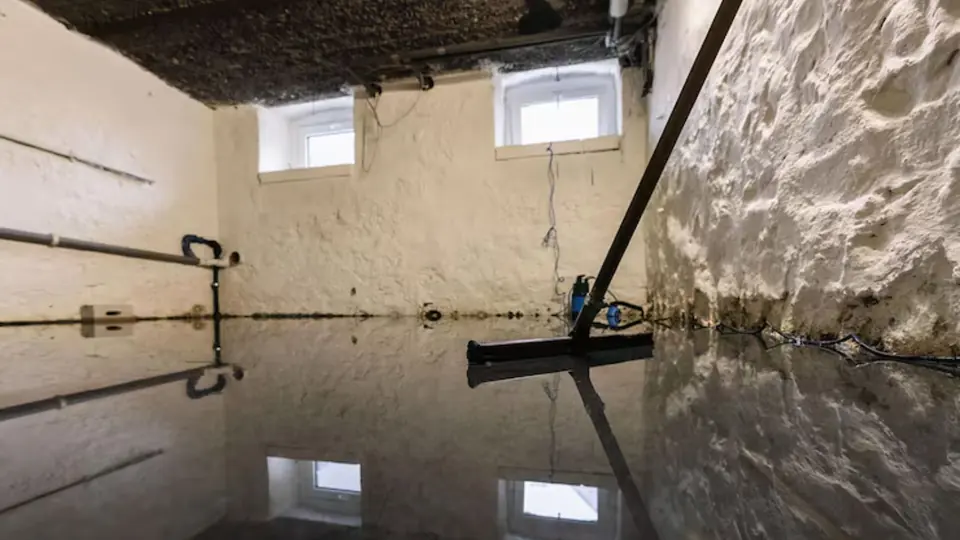
Basements go through a set order. Pumps clear deep water. Wet carpet, pad and the lower drywall are removed. The concrete slab and any remaining framing are dried with air movers and dehumidifiers, and surfaces are cleaned and sanitized if the water was gray or black.
If a basement floods again and again, restoration is not waterproofing. Ask a waterproofing or drainage contractor about the cause after the drying, and have the crew point out where water entered.
Sewage Backup Cleanup: What To Do First
Sewage backup is a health and safety hazard, so keep everyone out of the area and do not try to clean it yourself. Call the dispatch line, and if the problem is the street sewer, call your sewer provider. In much of Magna the sewer main belongs to Magna Water District, so a backup in the main may be theirs to clear.
A crew removes affected porous materials, bags and disposes of them, cleans and disinfects hard surfaces and dries the structure. Do not run washers, tubs or toilets until the line is cleared.
What The Restoration Looks Like
Safety and containment
Power, gas and water hazards are checked. Affected areas are closed off.
Extraction
Water is pumped out. Absorbed water is pulled from carpet and flooring.
Removal and sanitizing
Porous materials are removed. Hard surfaces are cleaned and sanitized.
Drying and rebuild
Equipment dries the structure, then repairs begin under water damage repair.
Insurance Notes
Look at your policy for flood coverage and its waiting period. The Utah Insurance Department's flood FAQ lists the claim line for NFIP policies, and privately written policies go through your agent. Photograph everything, and hold damaged items for the adjuster.
Cost Factors For Flood Restoration
- Water category, since floodwater and sewage need more removal.
- Affected square footage and depth.
- Materials involved, including finished basements and cabinets.
- Drying days and equipment.
- Rebuild scope after drying.
Call (385) 988-9410 to talk through your loss. The crew explains scope and price before any contaminated material is touched.
Flood Damage FAQs
Yes. A flood call at 3 a.m. is taken the same way as one at noon. Say where the water is coming from and whether it has reached outlets or the panel. No arrival time is promised.
Usually not. The Utah Insurance Department says basic homeowners and renters policies do not cover flood losses, and flood coverage needs a separate policy, often through the National Flood Insurance Program. Standard flood policies usually have a 30-day waiting period.
Yes. FEMA's Flood Map Service Center at msc.fema.gov and the Utah Risk Map at floodhazards.utah.gov show flood zones by address. Salt Lake County also publishes a floodplain map. Check the maps for your address instead of relying on the neighborhood.
Sewage water is Category 3 and is not safe to handle. Crews contain the area, remove porous materials, clean hard surfaces and sanitize. Wet drywall and carpet generally cannot be saved after contact.
After the water is out, the structure is dry by readings and, for contaminated water, the cleaning is complete. The crew explains what has been done and what is left before you decide.
Flood crews also work in Salt Lake City and nearby towns, and dispatch is open 24/7.