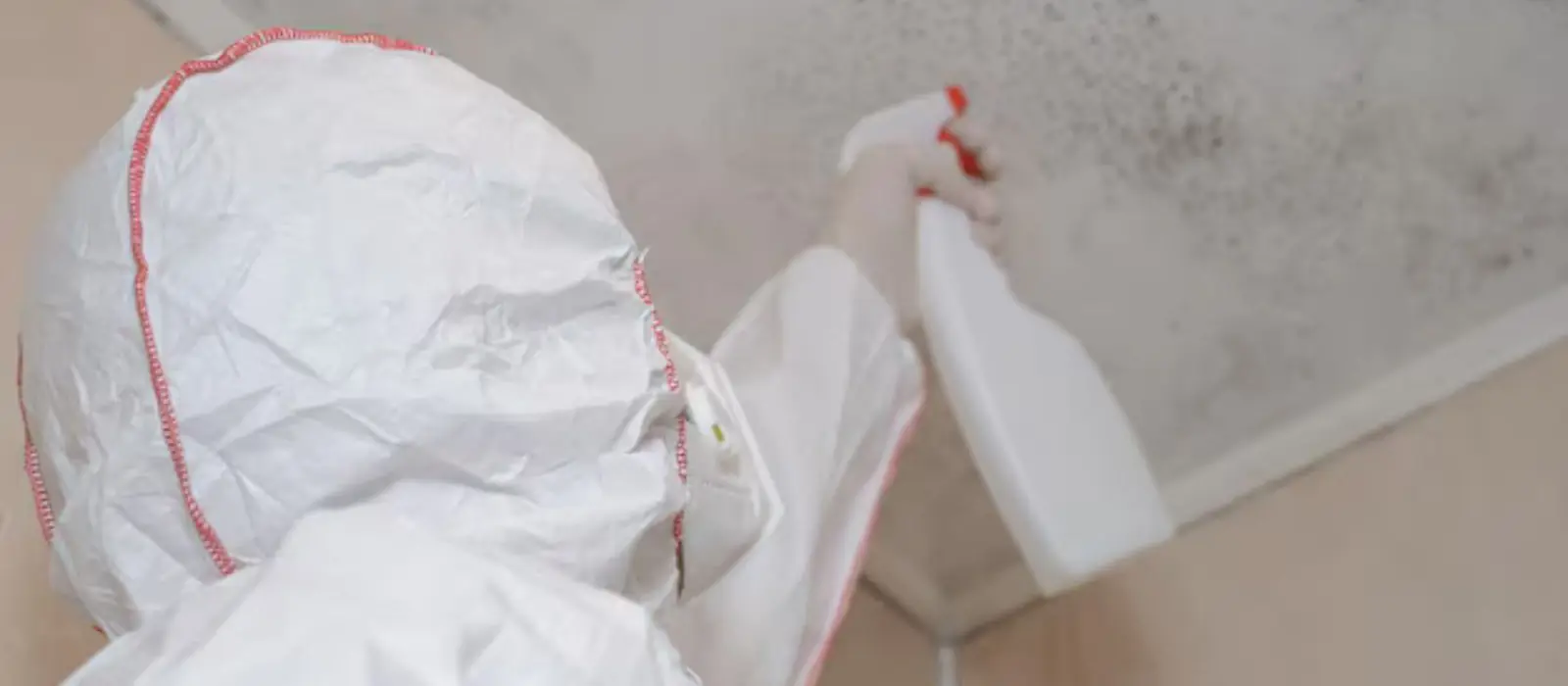
Removing mold from a ceiling is a four-part job, and the order matters. Skipping to the scrubbing is the usual reason it returns. This guide lays out the steps for a Magna, UT home and explains the point where a small spot becomes a job for a crew.
Nothing here is a health recommendation. If anyone in the house has concerns about indoor air, a physician is the person to ask.
Step 1: Stop What Is Feeding It
Mold on a ceiling needs moisture, so find the water first. Check the roof above for missing shingles or damaged flashing, the plumbing in any room above, and the exhaust fan duct. If you cannot find it, a moisture meter or thermal camera helps trace where the wet area runs.
If the leak is active, the first call is water mitigation, since mold remediation cannot finish while the ceiling is still getting wet.
Step 2: Judge The Size
| Situation | Reasonable approach |
|---|---|
| A few spots on painted drywall, dry, under about 10 square feet | Careful damp cleaning by the owner with protection |
| Larger area or visible growth on the back of the drywall | Call a crew for containment and removal |
| Sagging, soft or stained ceiling board | Drywall comes down, so call for removal and rebuild |
| Growth after a sewage or flood event | Call a crew, since contamination is involved |
Size is a rough guide. The condition of the board and the cause matter more.
Step 3: Clean Or Remove
Small spots on sealed paint can be wiped with a damp cloth and detergent while wearing gloves, eye protection and a respirator. Do not dry-brush it, and do not blast a fan at it. Bag the cloths before you carry them through the house.
Porous materials with growth, such as unsealed drywall, popcorn texture and insulation, are usually removed instead. A crew isolates the room with plastic barriers, runs a HEPA air machine and cuts the affected board out.
Call and describe what you see before you disturb it.
Step 4: Dry And Rebuild
After removal, the area needs to dry to normal readings before new board goes up. Rebuilding is covered by water damage repair. If you want independent proof the area is clear, a separate tester can sample after removal.
Protective Gear That Matters
For a small cleaning job, wear a respirator that fits your face, goggles that seal around the eyes, gloves that reach past the wrist and clothing you can wash right away. A paper dust mask is not enough. Cover the floor with plastic sheeting and tape it to the baseboard so debris does not drift onto carpet.
Wet the surface lightly before wiping so dust does not rise, and work from the outside of the stain inward.
After The Cleaning
Place wipes and sheeting in a sealed bag before you carry them out. Wash your clothes separately. Run a dehumidifier in the room until the ceiling and the air feel dry, and watch the spot for a few weeks. Any new growth means moisture is still reaching it, and the next step is a moisture assessment instead of more cleaning.
Why Containment Matters
Cutting into a moldy ceiling without containment sends dust and spores through the room and the house, and into the HVAC system if it is running. A crew turns off the system, seals vents, hangs plastic barriers and runs a HEPA machine that pulls air out through a filter. The result is that the mess stays in one room, and the rest of the home stays clean.
After The 2020 Earthquake
On March 18, 2020, a magnitude 5.7 earthquake struck with its epicenter in Magna, and more than 850 aftershocks followed. Some owners later found new cracks in ceilings and walls, and cracks can let water vapor and roof leaks reach places they did not before.
If you see new ceiling cracks and a stain below the roofline, ask a roofer and a plumber to check for leaks before cleaning. A cracked pipe joint above a ceiling can drip for months.
What Not To Do
- Do not paint over mold or stain-blocking primer on a wet ceiling.
- Do not use a household vacuum on growth.
- Do not mix cleaners, especially bleach with ammonia.
- Do not remove drywall without wetting it and sealing the room.
Ceiling Mold Removal FAQs
A small dry spot on sealed paint is within reach of a careful owner. Larger areas, hidden growth and anything after a leak are better handled by a crew.
A small ceiling can be removed and dried in a day or two. Larger jobs depend on the size and how long drying takes.
Not for most small jobs, since containment keeps the work area isolated. The crew can tell you what applies to your situation.
Old stains can sit dry for years. If the area is dry and not growing, a crew can confirm with a moisture meter before you do anything else.
Mold removal is also available in West Valley City and West Jordan.