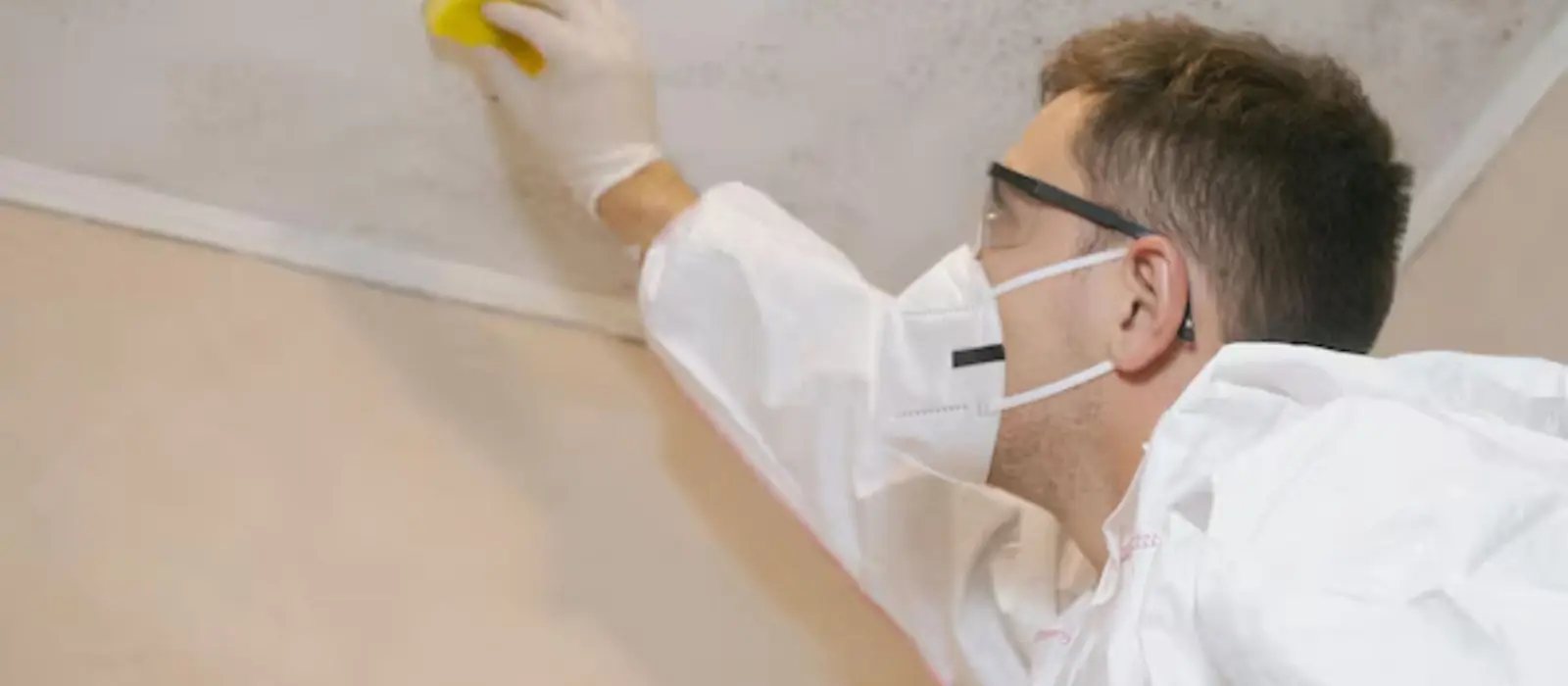
Bathroom ceilings are the first place many people notice mold. Steam rises, meets a cooler ceiling and leaves a film of water that never quite dries. In Magna, UT, where winter cold makes ceilings and exterior walls cooler, the effect is stronger.
This guide explains the usual causes, the ventilation fix that matters most and the point where cleaning is not enough.
Why Steam Wins
A ten-minute hot shower puts a lot of water vapor into a small room. If the exhaust fan is weak, off or venting into the attic, that vapor condenses on the coldest surface, which is usually the ceiling above the shower or the outside wall.
Over weeks, the damp film feeds growth in paint, caulk and the paper face of drywall.
Check The Fan Before You Clean
Is the fan running?
Hold a tissue to the grille. If it does not pull, the fan is weak or blocked.
Where does it vent?
Look in the attic. A duct that ends in the attic space dumps the moisture there.
Is the duct insulated?
An uninsulated duct in a cold attic condenses water that runs back down.
How long does it run?
Run it during the shower and for at least 20 minutes afterward.
Local histories describe homes built south and east of Main Street during the 1970s. Houses from that period often have small fans, or none, and some vent into the attic. Replacing the fan and running the duct outside is a small cost compared with a ceiling rebuild.
Call and describe how large the area is and how long it has been there.
Clean Or Replace
| Condition | Reasonable approach |
|---|---|
| Surface spots on sealed paint, dry board | Damp cleaning with protection, then fix the ventilation |
| Peeling paint, soft or stained board | Remove and replace the drywall |
| Growth on tile grout or caulk | Remove old caulk, clean, recaulk |
| Repeated growth after cleaning | Call for a moisture assessment |
A ceiling that has become soft needs water damage repair after the growth is removed. If the cause was a supply leak above or behind the tub, water mitigation is the first call.
Choosing And Sizing A Fan
Fans are rated in cubic feet per minute. A common guideline is about one CFM per square foot of bathroom floor, with a minimum of 50 CFM. A fan that sounds loud but moves little air is often blocked by lint or a collapsed duct. Fans with a humidity sensor turn on automatically and run until the room dries.
A short, straight duct to the outside moves air better than a long, kinked one. Use a metal or semi-rigid duct and seal the joints.
Paint And Primer
After the area is dry and cleaned, a stain-blocking primer and a paint made for high-moisture rooms give the ceiling a better chance. Paint does not cure a moisture problem, and it should be the last step. If you apply it over damp board, blistering returns within months.
When To Call
Call when the ceiling board is soft, when the stain keeps returning after cleaning and a new fan, when there is a stain on the ceiling below the bathroom or when growth covers a large area. These point to moisture that surface cleaning cannot reach.
The crew checks for leaks and condensation, removes damaged board and rebuilds, and you decide whether a new fan or duct is part of the project.
A Note On Older Homes
Older bathrooms often have plaster or textured ceilings, small windows and no fan. A window helps in summer and does little in winter. If you plan to remodel, adding a quiet, properly sized fan and ducting it outside is among the most useful steps, and it protects the ceiling for years.
Winter Makes Ceilings Colder
Salt Lake City records show about 127 days a year at or below freezing. In those months an exterior wall or top-floor ceiling sits colder than a hot shower can warm, so condensation is likelier there than in summer.
Magna Water District supplies the water, and the district publishes a water quality report on its website. If you wonder whether soap scum and mineral film are contributing to what looks like growth, that report lists what is in the supply.
Keeping A Bathroom Ceiling Clean
- Run the fan during and after every shower.
- Wipe the ceiling and walls after long showers if the fan is weak.
- Use paint rated for bathrooms.
- Fix drips at the tub spout, valves and supply lines.
- Check the fan duct once a year.
Bathroom Ceiling FAQs
We do not diagnose health effects, and color does not identify a species. Treat any growth as a sign of moisture and ask a physician about health concerns.
It may whiten the surface, but it does not reach inside drywall. Removal of damaged board is more reliable.
A plumber fixes leaks. A restoration crew handles growth. Both may be needed.
Replace the fan, or at least fix the venting, before you rebuild. Otherwise the new ceiling grows the same spots.
Crews also serve bathrooms in West Valley City and Salt Lake City.