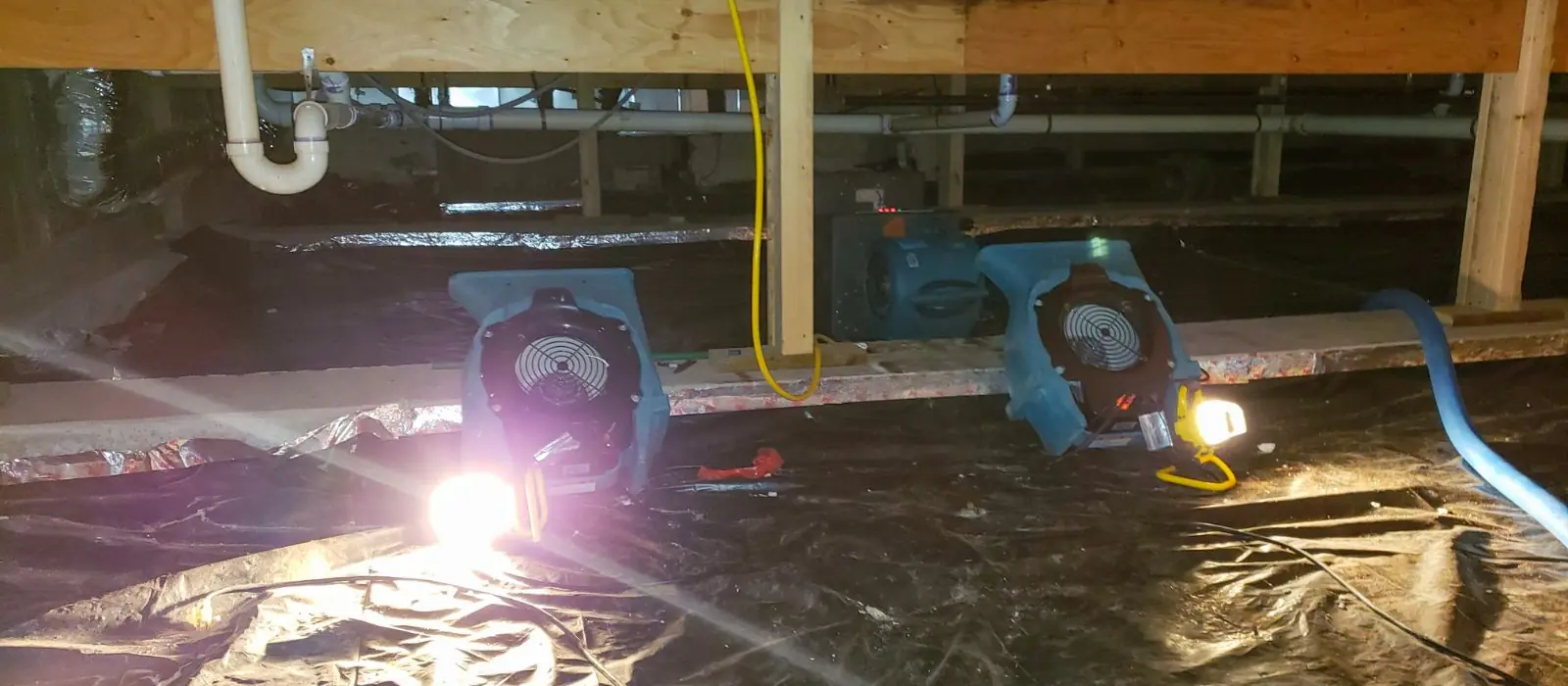
Drying out a flooded basement is a race against materials breaking down. In Magna, UT, a basement that floods during a spring thaw or a heavy storm can go from wet to moldy in days if the water sits. This guide covers safe first steps and how a proper drying job runs.
Safety comes first. Water and electricity share a basement more often than people think.
Safety Before Pumping
- Do not enter if water could reach outlets, extension cords, the panel or an appliance.
- If the water is dark or smells like sewage, keep everyone out.
- Call the utility or 911 for any gas smell or electrical issue.
- Do not use a household vacuum on standing water.
- Wear boots and gloves if you must go in.
Call the 24/7 line and describe the depth and the source.
Extraction Comes First
Water is removed in layers. A submersible pump handles depth. A wet vacuum or extraction unit takes the last inches and the water held in carpet. Pump slowly when the ground outside is saturated, because emptying a basement too fast can let outside groundwater push against the walls.
A crew handles this as emergency water removal and then moves into the drying phase.
Drying The Structure
| Material | Typical outcome | Why |
|---|---|---|
| Carpet and pad | Pad is usually removed, carpet sometimes saved | Pad holds water and does not dry well |
| Drywall | Cut out at the wet line, and sometimes higher | Wicks water upward |
| Concrete slab | Dried in place | Holds water for days but does not rot |
| Wood framing | Dried in place | Dries if opened and ventilated |
Air movers push dry air across surfaces while dehumidifiers pull moisture from the air. A crew places machines based on readings and moves them as the wet zones shrink. Most basements take several days, and the equipment keeps running until readings reach dry standards.
Opening a wall at the base lets air reach the cavity. Small holes are patched after drying.
What Happens If You Wait
After two or three days, wet drywall starts to stain and smell, and growth is possible. After a week, the work often includes mold remediation as well. Fast action costs less than any later cleanup.
A Realistic Timeline
| Phase | What happens | Typical time frame |
|---|---|---|
| Extraction | Pumps and vacuums remove standing water | Hours to a day |
| Removal | Wet pad, drywall and insulation come out | A day |
| Drying | Air movers and dehumidifiers run | Several days |
| Verification | Meters confirm dry readings | A day |
| Rebuild | New drywall, flooring and paint | Days to weeks |
Time frames are general. The readings decide when each phase ends.
Preventing A Repeat
After the basement is dry, look at what let the water in. Clear window wells and make sure covers are in place. Extend downspouts several feet from the foundation, and check that soil slopes away from the walls. Test the sump pump with a bucket of water and consider a battery backup.
A drainage contractor can assess recurring problems, which restoration cannot fix by itself.
What To Save And What To Toss
Items that sat in clean water for less than a day can often be dried and kept. Solid furniture, plastic, glass and metal usually survive. Upholstery, mattresses, particleboard, books, and anything soaked by sewage or floodwater usually do not.
Photograph everything before you throw it out, and keep a list with approximate values for your insurer. Move items you want to keep to a dry room, off the floor, while drying is underway.
Documenting For Your Records
Take photographs and short videos from each doorway before and after pumping. Note the water line on the walls, which shows how deep it got. Keep a list of damaged items. A crew adds moisture readings and drying logs, which together give your insurer a clear picture of what happened and how it was handled.
How Spring Flooding Moves
Salt Lake County's flood preparedness manual notes that springtime snowmelt floods often reach their peak around midnight, and that flood control staff cannot always help individual property owners right away. A basement may fill overnight while you sleep.
County sandbags are available at 604 West 6960 South in Midvale, with the county reminding owners that sandbags will not seal out water. Check your address on the FEMA map at msc.fema.gov.
Flood Insurance Reminder
The Utah Insurance Department says basic homeowners policies do not cover flood, and standard flood policies usually carry a 30-day waiting period. Ask your agent about your policy before a wet season.
Flooded Basement FAQs
For a damp room, yes. For a flooded basement, a residential unit cannot keep up with the volume of water in concrete and framing.
After readings show the slab and framing are dry. Flooring over damp concrete traps moisture and fails.
Not if the water volume exceeds its capacity or the power fails. A battery backup helps, and a plumber can size the system.
Soaked carpet pad, wet insulation and drywall that has wicked water. Photograph first.
The same approach applies in West Jordan and Salt Lake City, and flood damage restoration covers outside water.