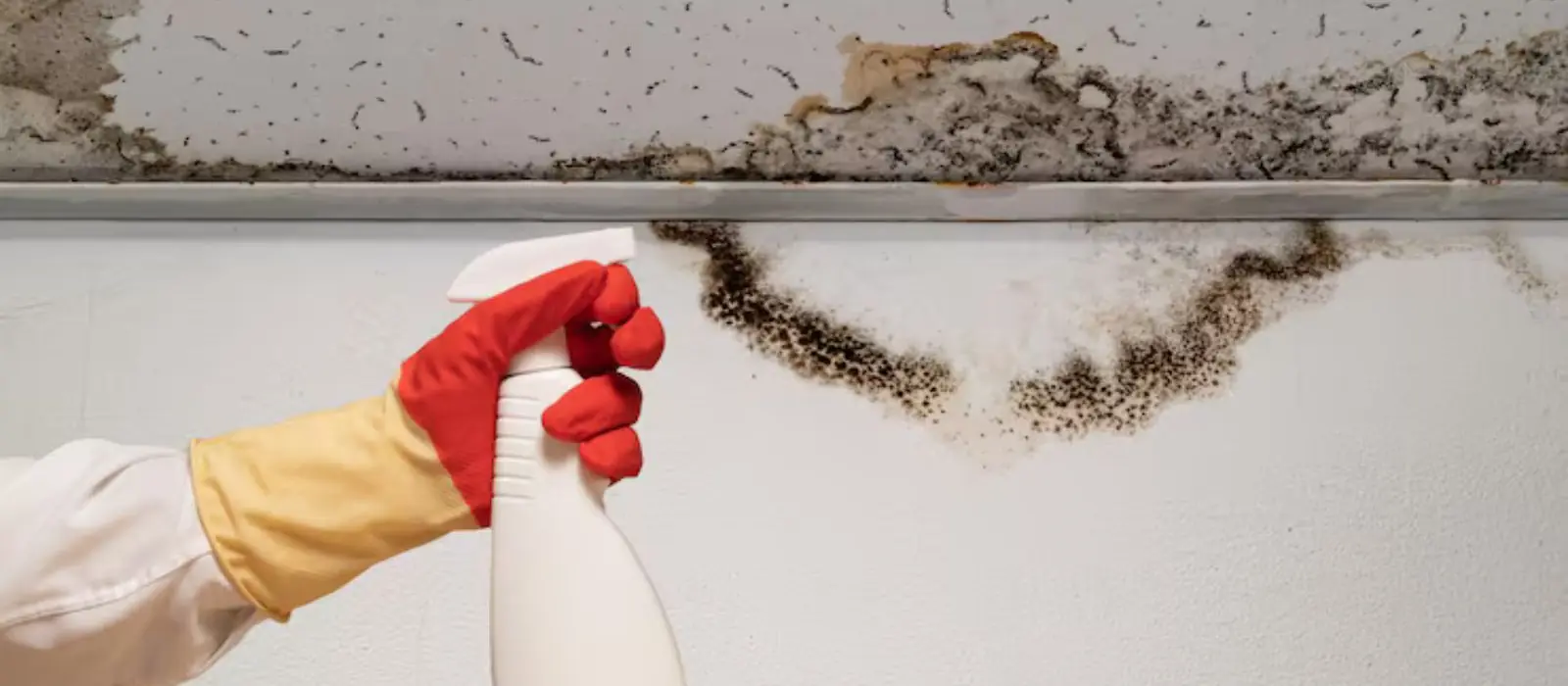
Dark spots on a ceiling worry people quickly, and the words black mold make it worse. The color alone does not tell you much. Mold comes in many colors, and only a lab can name a species. What the spots do tell you is that moisture has been reaching that ceiling, and that is the part to fix.
This guide explains what causes ceiling spots, how to tell mold from stains and what to do next in a Magna, UT home.
What The Color Does And Does Not Tell You
Black, green, white and gray growth can all be mold. Soot, dust and old water stains can look similar. A stain with a ring and a sharp edge is usually old water. Fuzzy, speckled or spreading patches that smell musty point toward growth.
We do not diagnose health effects, and a physician is the right contact for any concern about indoor air. For the building itself, any growth means a moisture source.
Common Causes On Ceilings
Roof leak
A ring that grows after rain, often near a vent or flashing.
Plumbing above
A bathroom, kitchen or laundry on the floor above leaking slowly.
Condensation
Warm moist air meeting a cold ceiling, common under poorly insulated roofs.
HVAC condensate
A clogged line or leaky drip pan near an air handler.
What To Do Next
- Stop the moisture source if you can find it.
- Do not scrub or disturb dry growth, which can spread spores.
- Keep the door closed and run a dehumidifier if the room is humid.
- Photograph the area so you can track whether it grows.
- Call for an assessment if the spot is larger than a small patch or keeps returning.
Call to talk through what you see before anything is disturbed.
How Remediation Handles A Ceiling
The crew finds and stops the moisture, then isolates the room with plastic barriers and runs a HEPA air machine. Affected drywall is cut out, bagged and removed, and the framing is cleaned and dried. See mold remediation for the full process, and for a ceiling that sagged from water first, water damage repair covers the rebuild.
Ask any company whether its crews work to ANSI/IICRC S520, the published standard for mold remediation.
When A Lab Test Helps
Testing is useful when you suspect hidden growth but cannot see it, when a buyer, lender or landlord needs documentation, or when you want proof after removal. A test of visible growth rarely changes what has to be done, because the moisture still has to be fixed and the affected material still has to be removed.
If you do test, use a company that does not also do the removal. Independent clearance means the person grading the work is not the person who did it.
Keep A Simple Record
Write down when you first saw the spot, what the weather was and whether anyone used the bathroom or washer above. Photograph the ceiling weekly from the same spot. If the area grows, the moisture is active. If it stays the same and the board is dry and firm, that is useful information for a crew and for your insurer.
Do not cut into the ceiling yourself to look. Opening a moldy ceiling releases material into the room, and a crew can do the same inspection under containment.
What Not To Assume
Do not assume that a ceiling stain is old because it looks faded. Water may have returned in small amounts. Do not assume it is harmless because it is small, since growth can run along the back of the board. And do not assume it is the roof, since plumbing above and condensation are just as common.
A moisture reading answers these questions in minutes and saves guessing.
Dry Climate, Wet Ceilings
Long-term records for Salt Lake City show roughly 15.5 inches of precipitation a year, which is dry by national standards. A dry climate does not protect a ceiling, because the moisture usually comes from inside the house.
Cold winters add condensation, since a chilled roof deck can pull water vapor out of warm indoor air. Fans that vent outside and not into the attic remove much of that source.
Insurance And Documentation
Some policies cover mold that follows a covered water loss, and many exclude mold from long-term leaks or neglect. Photograph the area, record when you first noticed it and ask your insurer what applies.
Ceiling Mold FAQs
No. Paint hides it and traps moisture. The source has to be fixed and the growth removed first.
Not always. Visible growth tied to a known leak can be removed without one. A test helps when growth is hidden or documentation is needed.
Because the moisture source is still there, or the growth reached the drywall behind the surface. Cleaning the paint removes only what you can see.
Older homes without bathroom exhaust fans or with fans that vent into the attic often do. Check where your fan vents.
The same advice applies in West Jordan and Salt Lake City.