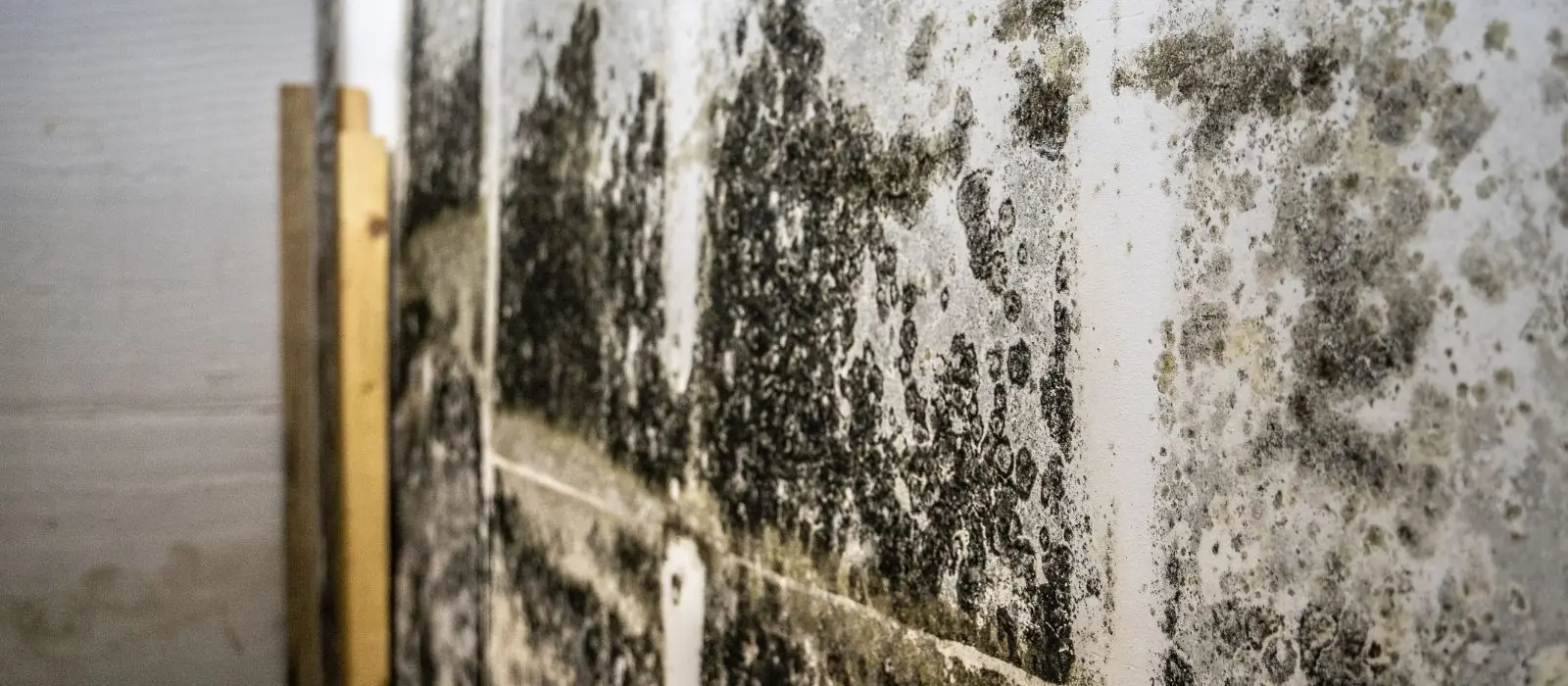
Basement mold is a moisture problem first and a cleaning problem second. If you wipe growth off a wall and leave the damp source alone, it will be back within weeks. Getting rid of it means working in the right order, and in Magna, UT the usual starting point is spring runoff, window wells and slab seepage.
Here is how to approach it, including what is reasonable to do yourself and where a crew is the better call.
Step One: Find The Moisture
Walk the basement with a flashlight and your hand. Cold, damp spots on a wall or slab, a musty corner, water stains at the base of a wall and white mineral deposits all point toward the source. Check window wells, the sump pit, any laundry plumbing and the dryer vent, which can dump humid air into the room.
| Clue | Likely source | Fix first |
|---|---|---|
| Wet wall base after storms | Window well or grading | Clear well, extend downspouts |
| Dark corner near laundry | Plumbing or dryer vent | Repair plumbing, vent outside |
| Damp slab in spring | Groundwater | Dry slab and ask about drainage |
| Cold wall with condensation | Warm air meeting cold concrete | Run a dehumidifier, insulate if needed |
Step Two: Decide Who Does The Cleaning
A small patch on a hard, non-porous surface can be cleaned by an owner who wears gloves, a respirator rated for the job and eye protection. Anything on drywall, insulation, carpet or wood framing is different, and so is any patch larger than a few square feet. Porous materials with growth are usually removed instead of cleaned.
If growth covers a larger area, the work needs containment so spores do not spread to the rest of the house.
Call to talk through the size of the area and what to do next.
What A Crew Does Differently
- Finds and corrects the moisture source with meters.
- Seals the work area and runs HEPA air filtration.
- Removes porous materials with growth and bags them inside containment.
- Cleans and dries remaining surfaces.
- Offers a clearance test by an independent tester when documentation matters.
After a flood or burst pipe, water mitigation done early lowers the risk that mold ever starts. If the water was from a sewer or floodwater, flood damage restoration covers the cleaning.
Stored Items And Furniture
Cardboard boxes, books and fabric absorb moisture and feed growth. After a damp spell, move stored items off the floor and away from exterior walls, and sort what has to be discarded. Items with visible growth that cannot be cleaned, such as porous cardboard and upholstered furniture, are usually thrown out.
Hard items such as plastic bins, metal and glass can be wiped and dried. Keep everything you remove in the garage or outside while the basement is treated, and photograph valuables for your insurer.
Humidity Targets
A cheap hygrometer shows indoor humidity. Basements often sit near the damp end, and readings above about 60 percent for long stretches invite growth. A dehumidifier with a drain hose to a floor drain or pump runs without emptying a bucket, and many owners find that one correctly sized unit protects a basement through spring.
Cost And Scope In Plain Terms
The cost of basement mold removal follows the same factors as any water job. The area of growth, the materials involved, the containment needed and the moisture correction all change the scope. A small patch on concrete is a short job, while growth across finished drywall and carpet involves removal and a rebuild.
Scope and price are explained before work starts. Ask what happens to the moisture source, since a quote that covers only the visible growth leaves the cause in place.
Springtime And Salt Lake County Flood Resources
Snowmelt lifts creek and canal flows across the county every spring. Sandbags come from the county shed in Midvale, and the county says they divert water and do not seal it out. A basement that floods from a ditch overflow is a call to county flood control as well as to a restoration crew.
A basement that is damp every April deserves a drainage assessment once the cleanup is done, and a look at your address on the FEMA map.
Keeping It From Returning
- Keep indoor humidity under about 50 percent with a dehumidifier and a meter.
- Extend downspouts away from the foundation.
- Slope soil away from the wall.
- Vent dryers and bathroom fans outside.
- Do not store cardboard boxes against exterior walls.
Mold remediation cannot promise that growth will never return, because that depends on moisture control afterward.
Basement Mold FAQs
Bleach does not penetrate porous materials, so growth in drywall or wood can remain. Removal is the better approach for porous materials.
A fan in a mold area can spread spores. Dry the room with a dehumidifier and keep the door closed until the area is cleaned.
Not for visible growth tied to a known leak. A test helps for hidden growth or documentation.
Basements here collect moisture during spring runoff, and any basement with a leak or high humidity can grow mold. Fix the source and keep humidity low.
Crews also serve West Valley City basements and Salt Lake City homes with similar problems.